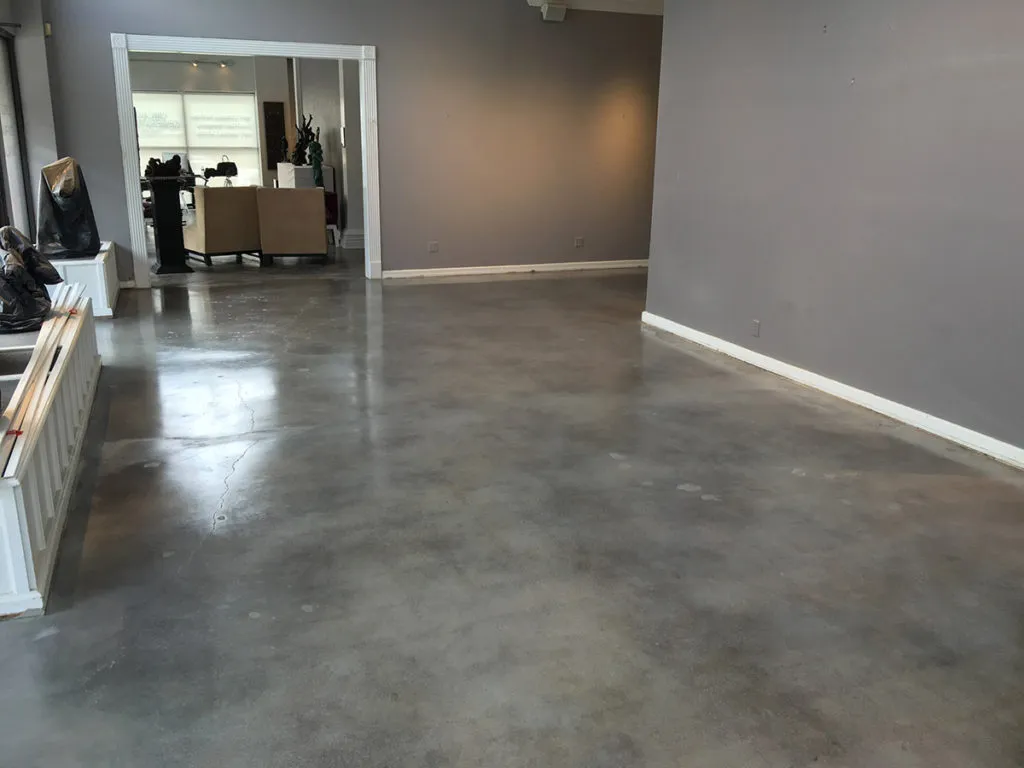
Repair concrete that is solid but worn, cracked or out of level. Replace concrete that has lost its support or broken into pieces. The situations below are the ones Atlanta homeowners ask us about most. Any dollar amounts in the questions are the customer's own numbers.
The price ranges on this page are national figures published by HomeGuide for 2026. They are not quotes from us. In Atlanta the slope of the lot, the red clay under the slab, truck access and local labor and material prices all move the number. Last checked October 2026.
How do I decide between repair and replacement?
Look at three things: the pieces, the ground and the water. If the slab is in large solid pieces, the ground under it is firm, and you can stop water from getting beneath it, repair makes sense. If any of the three fails, money spent on the surface is likely wasted.
My driveway is 20 years old and one section by the garage has sunk. I was quoted $9,000 to replace all of it. Do I have to?
Probably not. A 20-year-old driveway with one low section by the garage usually has a local problem, which is loose fill settling next to the foundation. Lifting that section, or cutting it out and pouring it again on compacted stone, costs a fraction of the $9,000 you were quoted for everything. Ask for the smaller job to be priced. Replace the whole drive only if the other sections are cracked and moving as well.
Repair for $7,000 or replace for $14,000 when I plan to sell in two or three years?
Start by asking what the $7,000 buys. If the repair leaves a driveway that looks even and drains properly, it will do what you need for two or three years and you keep the other $7,000. If the repair is a patchwork that a buyer's inspector will write up, the $14,000 replacement is easier to defend at sale. We cannot tell you what either adds to a sale price. An agent who sells in your neighborhood can.
I am selling the house and the driveway has a few long cracks. Repair, replace or leave it?
If the cracks are tight and the surface is level, clean and seal them and leave the rest. Buyers and inspectors react to height differences, loose pieces and water running at the house far more than to sealed hairline cracks. Fix anything a person could trip on. Replacing a sound driveway just before you move rarely makes sense.
One contractor says tear it out. Another says pour a new layer over it. Who is right?
Ask each one what is under the slab now. A new layer over the old one only works on concrete that is stable, and it lifts the surface, which matters at the garage and the street. If the old slab has sunk, rocked or cracked from movement, removal is the honest answer, since the new layer would crack in the same places. If the slab is sound and only looks tired, a bonded overlay may be all it needs.
My driveway is 30 years old with root cracks and I am on a tight budget. Can I grind and patch?
Yes, for a while. On a tight budget, grinding the raised edges and sealing the cracks makes the driveway safer and keeps water out. It will not stop the roots, so expect to do it again in a few years. If you can, put the money toward replacing only the one or two worst panels, with the root dealt with under an arborist's advice. In the City of Atlanta, check the tree rules before any large root is cut.
I have many small cracks but no sinking. Is sealing or resurfacing enough?
Sealing or resurfacing is enough when the cracks are fine, the slab is flat and nothing moves. Seal the cracks if you only want to keep water out. Resurface if you also want a uniform look. Neither adds strength, so if the fine cracks are the first sign of a slab that is starting to settle, watch it through one wet season before you spend on the surface.
The real price for your property comes from a free on-site estimate and a written quote. Call (678) 736-8780 or send us a photo of the concrete.