Two City of Atlanta offices matter for most concrete work. The Atlanta Department of Transportation (ATLDOT) controls the public right of way, which includes the sidewalk and the driveway apron. The Office of Buildings reviews work on your own lot. Rules differ in Decatur, Sandy Springs, Marietta and the other cities around Atlanta, so we check the rule for your address before we quote.
Do I need a permit for a driveway or patio in Atlanta?
You need a permit for any part that sits in the public right of way. ATLDOT lists installing or repairing a driveway apron or a sidewalk as work that needs its permit. For a driveway or patio that is fully on your lot, we could not find one clear published rule that covers every case, so we confirm it with the Office of Buildings for your address. Zoning lot coverage limits and the city's tree rules still apply even where no building permit is needed.
Do I need a permit to widen my driveway?
If you widen it at the street, yes. Changing the apron or the curb opening is right of way work and goes through ATLDOT. If you only widen the part on your own lot, the questions are how much of the lot will then be covered and whether any protected tree is affected. We measure both before giving you a price.
Who owns the driveway apron: me or the city?
The apron is on public right of way, but it serves your property. In practice the owner pays to build and repair it, and the city sets the standard and issues the permit. ATLDOT publishes standard details that all permitted right of way work must follow. A contractor cannot simply pour a new apron to match the rest of the driveway.
Who is responsible for the sidewalk in front of my house?
In the City of Atlanta, the code puts it on you. Section 138-14 of the Atlanta Code of Ordinances makes the abutting property owner responsible for sidewalk maintenance. This rule has been debated at City Council for years, and the city has paid for some repairs itself, so ask ATLDOT what applies now on your street before you spend money. The neighboring cities each have their own rule.
The city sent me a notice to fix the sidewalk. Can I hire my own contractor?
Read what the city sent first, because the notice gives the deadline and the options. In general you can hire your own contractor for sidewalk work, as long as the contractor gets the ATLDOT right of way permit and builds to the city's standard details. ATLDOT has a qualified contractor checklist for people applying for those permits. We have not found a rule that makes you use a city crew, but confirm it with the office named on the notice.
How close to the property line can I pour, and do I need a survey?
Zoning sets it, and it varies by district and by what you are building. Flat paving is usually treated differently from a structure, but a driveway hard against the line can send water onto the next lot, and that causes disputes. You need a survey when the line is uncertain, when a permit application asks for a site plan, or when a neighbor disagrees. On old intown lots the fence is often not on the true line.
Do I need HOA approval?
If your home is in an HOA, almost certainly yes, and it is separate from any city permit. Many subdivisions in Alpharetta, Roswell, Smyrna and newer parts of Atlanta require written approval for driveway changes, patios, walls and decorative finishes. Get the approval before you sign a contract. We can supply a sketch and a description of materials for your application.
How much of my lot can I cover with concrete?
It depends on your zoning district. In Atlanta's R-4 single-family district, for example, the zoning code says maximum lot coverage shall not exceed 50 percent of the total lot area. Other districts have other limits. New driveways and patios add impervious surface, and small intown lots with a large house can already be near the cap. Check your district before planning a big patio or a second parking space.
When does a retaining wall need an engineer or a permit?
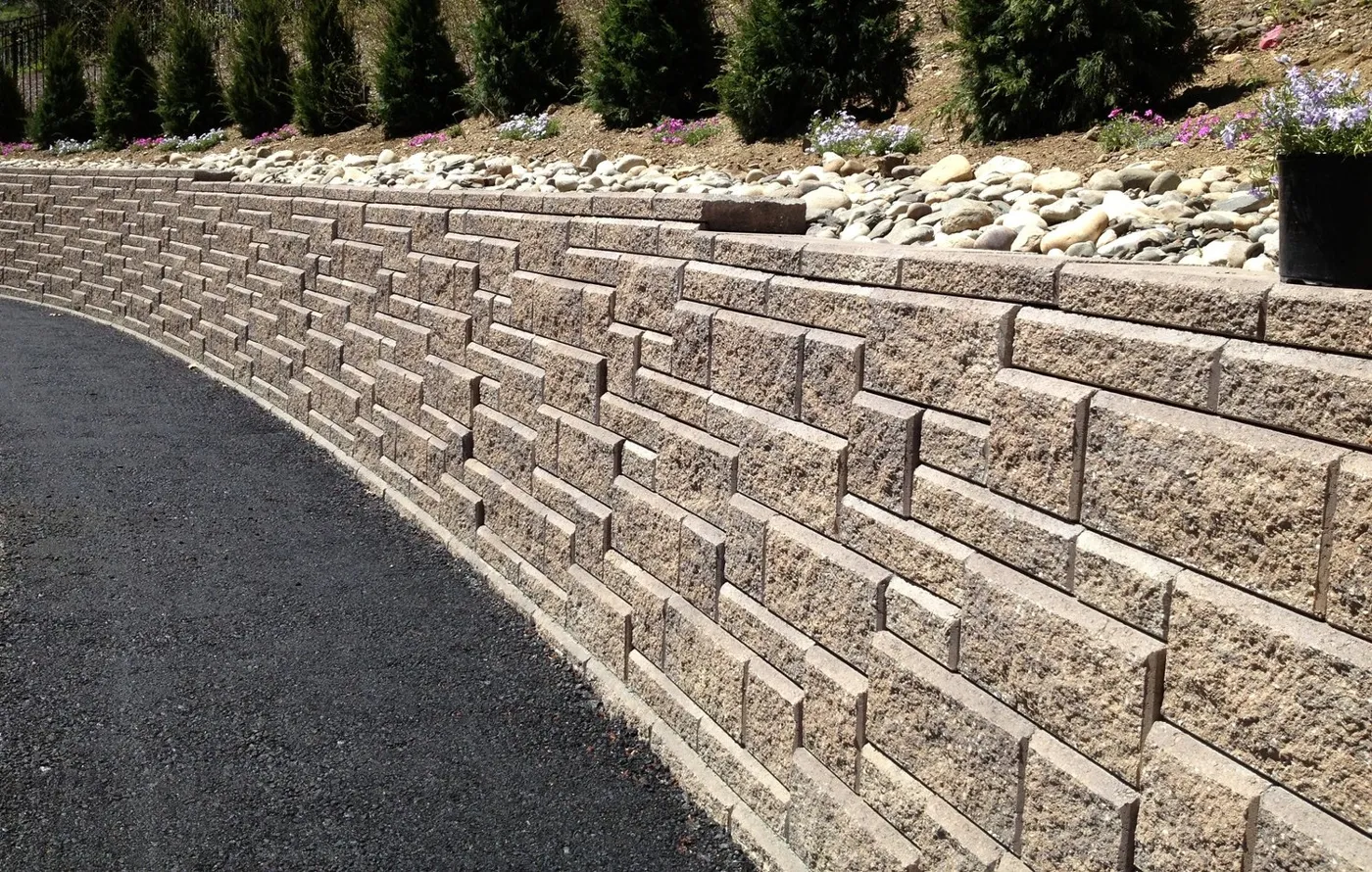
Height and load decide it. DeKalb County, as one local example, requires a building permit and drawings sealed by a professional engineer for walls 4 feet or more measured from the bottom of the footing to the top of the wall, and for a wall of any height that supports a surcharge such as a driveway or a building. Rules of this kind are common across the metro, but each city sets its own. Because Atlanta lots are steep, many walls here reach that point.
How do I find underground utility lines before digging?
Contact Georgia 811. Georgia 811 says a request must be made at least 3 business days before digging, and that Georgia law requires anyone digging with mechanized equipment to contact them first. The member utilities then mark their lines. When we do the work, we make the request. Private lines such as sprinkler pipe, yard lighting, a gas line to a grill or a septic line are not covered, so tell us about any you know of.
Do I need a permit for a wheelchair ramp or a wider walkway?
Often, yes. A ramp attached to the house is a structure, with rules on slope, landings and handrails, and it is normally reviewed by the building office. A wider walk on your own lot is simpler but still counts toward lot coverage. Tell us who will use the ramp and what chair or scooter they have, and we will lay it out to suit. We have no published price for ramps, so they are quoted after a visit.
My house is in a historic district. Can I replace old concrete?
Usually, but ask before you start. Atlanta has many locally designated historic and landmark districts, and visible exterior changes there are reviewed by the Atlanta Urban Design Commission. Old hexagonal pavers, scored walks and granite curbs are part of what the rules protect. We could not confirm online which concrete work needs a certificate in each district, so we check with city staff for your street. Decatur, Marietta, Roswell and College Park have their own historic districts.
Do Atlanta's tree rules affect a new driveway or patio?
They can. The City of Atlanta has a tree protection ordinance that covers trees on private property, and it is enforced by the city's arborist staff. Digging, grading or paving close to a protected tree can damage its roots and may need review. We could not verify the exact size and distance rules online, so if a large tree stands near the work, we raise it with the city before any digging.
The real price for your property comes from a free on-site estimate and a written quote. Call (678) 736-8780 or send us a photo of the concrete.